








Quick answer: The right dog bed depends on your dog's size, age and sleeping style. Puppies do well on affordable, washable beds they can grow into, while senior and large-breed dogs benefit most from orthopaedic beds with bolster sides that cushion joints and give the head somewhere to rest. Read on for our full guide.
Written by Petifo's Expert Team · Updated July 2026 · Reading time: 7 min
Why a Good Dog Bed Actually Matters
It is tempting to think any old cushion will do, but veterinary research consistently shows that where and how a dog sleeps has a measurable effect on joint health, recovery and even behaviour. According to the RSPCA, dogs spend roughly half their lives asleep. That is a lot of time for a poorly supported spine to take its toll.
A proper bed does three things that a sofa cushion or folded blanket cannot:
- Pressure distribution — quality foam or fibre fill spreads your dog's weight evenly, reducing stress on hips, elbows and shoulders.
- Thermal insulation — sleeping on a cold floor pulls heat from a dog's body. A raised or padded bed keeps them off the ground and warmer during cooler months.
- Security and routine — dogs are den animals. Having a defined resting spot lowers cortisol levels and can reduce anxiety, particularly in rescue dogs or breeds prone to nervousness.
✅ Good to know: The Kennel Club recommends that every dog has its own bed placed in a quiet, draught-free area — even if it also shares the sofa with you.
Know Your Dog's Sleeping Style
Before you browse beds, spend a day or two watching how your dog actually sleeps. Their preferred position tells you exactly which shape of bed will suit them best.
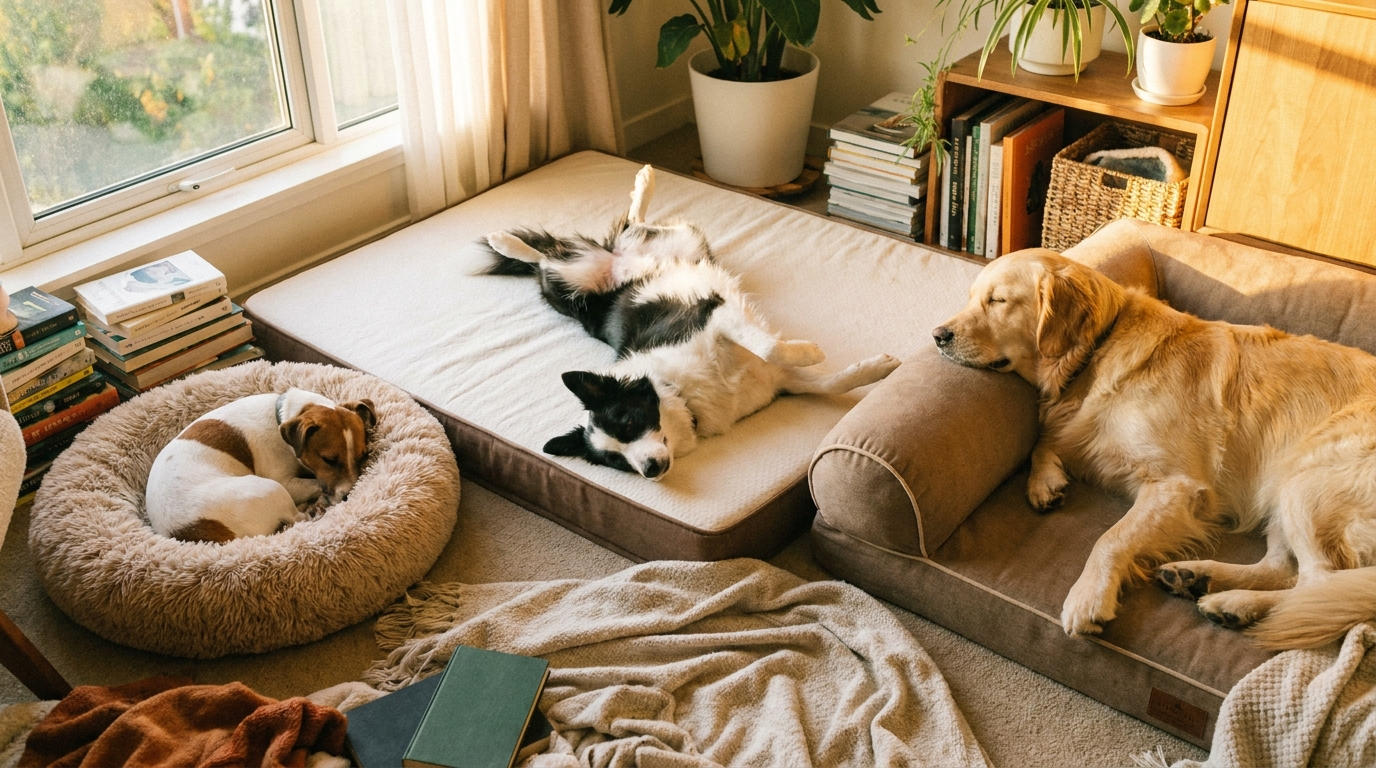
The curler. Dogs that tuck into a tight ball feel safest in round or oval beds with raised edges. The bolster walls give them something to press their back against, mimicking the feeling of sleeping in a burrow. A bed like the Oval Dog Bed works perfectly for curlers because the continuous rim keeps warmth in and draughts out.
The sprawler. Big dogs and confident sleepers stretch right out, legs in every direction. They need a flat, spacious mattress with no walls boxing them in. The Soft Dog Mattress is ideal here — generous surface area, plush padding and a low profile for easy rolling.
The leaner. Some dogs sleep on their side but push their head or back against a raised edge. These dogs love bolster beds because the rim doubles as a pillow. If your dog tends to prop its chin on the arm of the sofa, that is a clear sign it wants head support.
Dog Bed Types Explained
Walk into any pet shop (or scroll through any online store) and you will find dozens of shapes. Here is what each one is actually designed for.
Flat mattress beds are the simplest design — a padded rectangle or square that sits on the floor. They suit sprawlers and dogs that move around a lot in their sleep. Look for a removable, machine-washable cover and a non-slip base. Our Soft Dog Mattress ticks both boxes and comes in sizes to fit breeds from Beagles to Bernese Mountain Dogs.
Bolster beds have raised sides on three or four edges. They keep draughts away, give nervous dogs a feeling of enclosure and provide a natural headrest. The bolster design is arguably the most versatile option because it suits curlers and leaners equally well.
Raised or elevated beds sit on legs or a frame, lifting your dog off the floor entirely. They are excellent for breeds that overheat easily because air circulates underneath. The Round Pet Bed on Legs combines this airflow advantage with a cosy nest shape — a genuine best-of-both design.
Orthopaedic beds use memory foam or high-density support foam that moulds to a dog's body. They are essential for senior dogs, post-surgery recovery and large breeds whose joints carry significant load every day. An orthopaedic bed is not a luxury — it is preventative healthcare.
💡 Tip: If your dog is between two sizes, always go up. A bed that is too small forces awkward sleeping positions, which defeats the purpose of buying a supportive one in the first place.
Size Guide: Getting the Measurements Right
The single most common mistake people make is buying a bed that is too small. Your dog should be able to lie fully stretched out without any paws hanging over the edge. Here is a simple method to get it right:
- Measure your dog from the tip of the nose to the base of the tail while they are lying stretched out on their side.
- Add 15–20 cm to that length. That is your minimum bed length.
- For bolster beds, remember that the raised sides eat into the interior sleeping space — so check the internal dimensions, not just the outer ones.
A rough breed-size guide:
- Small breeds (Chihuahua, Dachshund, Jack Russell): 50–65 cm beds
- Medium breeds (Cocker Spaniel, Border Collie, Beagle): 70–90 cm beds
- Large breeds (Labrador, Golden Retriever, German Shepherd): 90–110 cm beds
- Giant breeds (Great Dane, St Bernard, Irish Wolfhound): 120 cm and above
Browse the full range in our Dog Beds & Mattresses collection to compare sizes across styles.
Senior Dogs and Joint Support
As dogs age, their cartilage wears down and conditions like osteoarthritis become increasingly common. The AKC estimates that around 25 per cent of dogs will develop arthritis at some point in their lives, with the figure rising sharply after the age of seven. For these dogs, the right bed is not optional — it is part of their pain-management plan.
What to look for in a senior dog bed:
Look for memory foam that contours to pressure points around the hips and shoulders, and a low entry point so your dog does not have to step up or climb in — stiff joints make even small hurdles painful. Bolster sides are a bonus because they support the head and neck, reducing the effort needed to hold it up while resting. Finally, a removable, washable cover is essential since older dogs are more prone to incontinence and skin sensitivities.
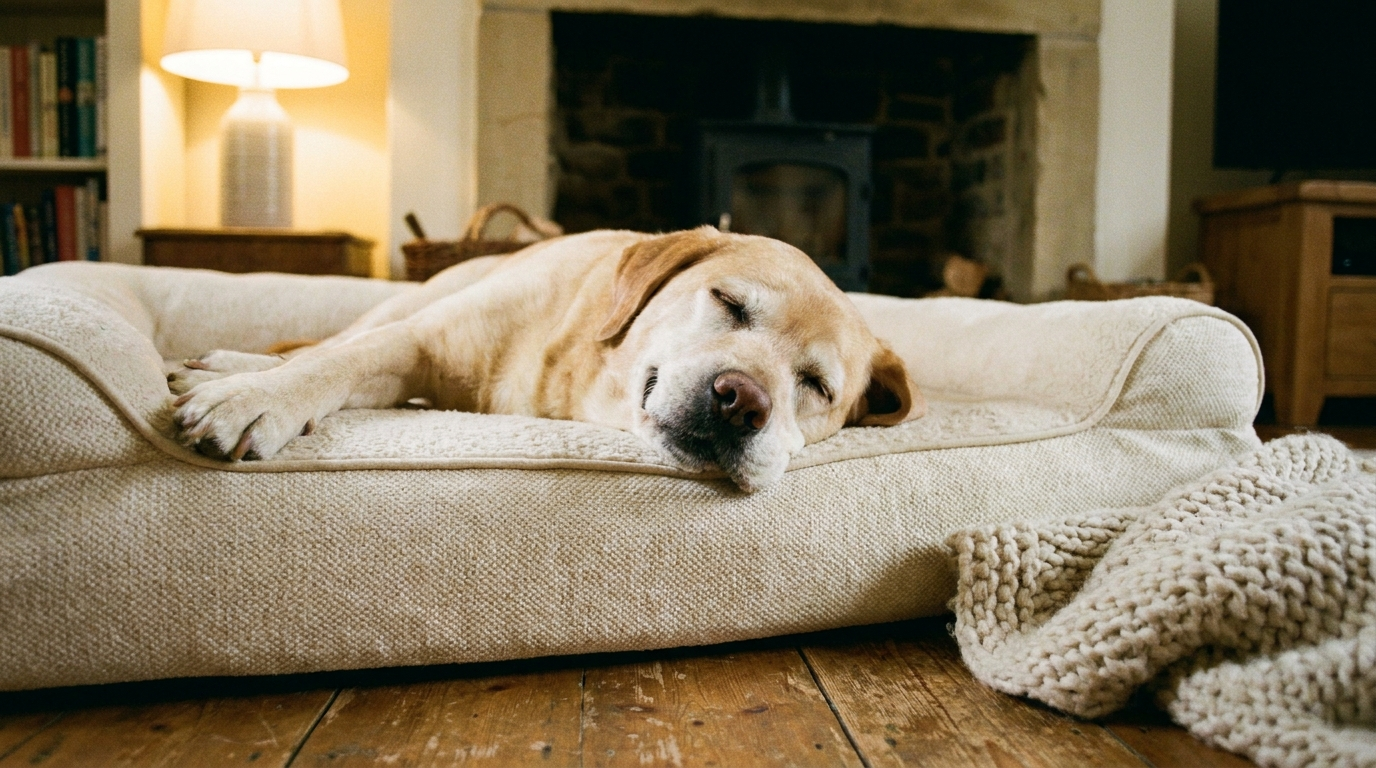
⚠️ Important: If your dog suddenly starts avoiding its bed or seems reluctant to lie down, visit your vet. Changes in sleeping behaviour can be an early sign of joint pain, spinal issues or other health conditions that need attention.
Choosing a Bed for Puppies
Puppies chew. That is the first thing to accept. Spending a fortune on a premium orthopaedic bed for a four-month-old who is going to shred the zip is not a wise investment. Start with something affordable, durable and easy to wash.
Once your puppy is past the heavy teething stage — usually around 7 to 10 months, depending on the breed — you can upgrade to a more supportive bed. By that point, you will also have a much clearer idea of their sleeping style and adult size, which makes choosing the right shape far easier.
Choose a bed with a removable cover you can throw in the washing machine weekly, and place it in the area where you want the puppy to sleep long-term — consistency helps with crate-free training. Avoid beds with small removable parts such as buttons or decorative bows that a puppy might swallow.
💡 Tip: Place a worn T-shirt of yours on the puppy's bed during the first few nights in a new home. Your scent helps them settle and reduces nighttime whining.
Our Pick: The Orthopaedic Dog Bed with Bolster
If we had to recommend one bed that covers the widest range of dogs and life stages, it would be this one. It pairs genuine orthopaedic foam with bolster sides that work as both a draught shield and a headrest — making it equally suited to leaners, curlers and senior dogs needing extra joint relief.

Petifo's Orthopaedic Dog Bed with Bolster
Premium memory-foam bed with supportive raised edges — designed for dogs who love to rest their head on something cosy while their joints get the relief they deserve.
✨ Orthopaedic foam + bolster sides for head and neck support
View product →Frequently Asked Questions
1. What type of dog bed is best for arthritis?
An orthopaedic memory-foam bed is the best choice. The foam moulds to your dog's body and distributes weight away from painful joints. Look for one with a low entry point so your dog does not have to climb in. Our Orthopaedic Dog Bed with Bolster is specifically designed with this in mind.
2. How often should I replace my dog's bed?
Most quality dog beds last between one and three years with regular washing. The key indicator is the foam or filling — press it flat with your hand and release. If it does not spring back within a few seconds, it has lost its support and needs replacing.
3. Should puppies have orthopaedic beds?
It is not necessary for healthy puppies. Their joints are still developing and they do not carry the wear-and-tear load of older dogs. A simple, washable bed is more practical while they are teething. Save the orthopaedic upgrade for when they are past the chewing stage, around 8 to 12 months old.
4. Do dogs prefer beds with sides or flat beds?
It depends on their sleeping style. Dogs that curl up or lean against surfaces prefer bolster beds with raised sides. Dogs that stretch out fully in their sleep are usually happier on a flat mattress with plenty of room to sprawl.
5. Can a dog bed help with anxiety?
Yes. A consistent, comfortable sleeping spot gives dogs a sense of security. Bolster beds and enclosed designs work especially well for anxious dogs because the walls create a den-like feeling. Pairing the bed with a familiar scent — such as a worn piece of your clothing — can further reduce stress.
6. What size bed does a Labrador need?
Most adult Labradors need a bed that is at least 90 to 100 cm in length. Measure your dog from nose to tail base while stretched out, then add 15–20 cm. If your Lab is a sprawler, lean towards 110 cm to give them room to stretch fully.
7. Is it worth paying more for a dog bed?
Generally, yes. Cheap beds compress quickly and need replacing within months. A well-made bed with quality foam retains its shape for years and genuinely benefits your dog's joints — especially for medium, large and senior dogs.
Click the image below to learn more about Soft Dog Mattress.

Sources: RSPCA, The Kennel Club, AKC, PetMD.