



Written by Petifo's Expert Team · Updated July 2026 · Reading time: 6 min
Quick answer: The best litter box setup combines the right tray type for your cat's personality, a quiet and accessible location away from food and water, the golden "one per cat plus one" rule, and a consistent cleaning routine. For a tidy home, a litter box cabinet hides everything away whilst giving your cat the privacy they crave.
Why Your Litter Box Setup Actually Matters
Most cat owners put far more thought into choosing the right food than they do into setting up the litter tray — and that's a shame, because a poor toilet setup is one of the top reasons cats start avoiding the box entirely. According to the RSPCA, inappropriate toileting is among the most common behavioural complaints from cat owners, and it almost always traces back to something about the setup rather than the cat being difficult.
Cats are fastidiously clean animals. They have strong preferences about where they go, what surface they stand on, and how much privacy they get. When those preferences aren't met, they'll find somewhere else — your laundry basket, the bathroom rug, or that one corner behind the sofa. Getting the setup right from the start saves you a world of frustration and keeps your cat relaxed and comfortable in their home.
Open vs Covered vs Cabinet: Which Type Is Best?
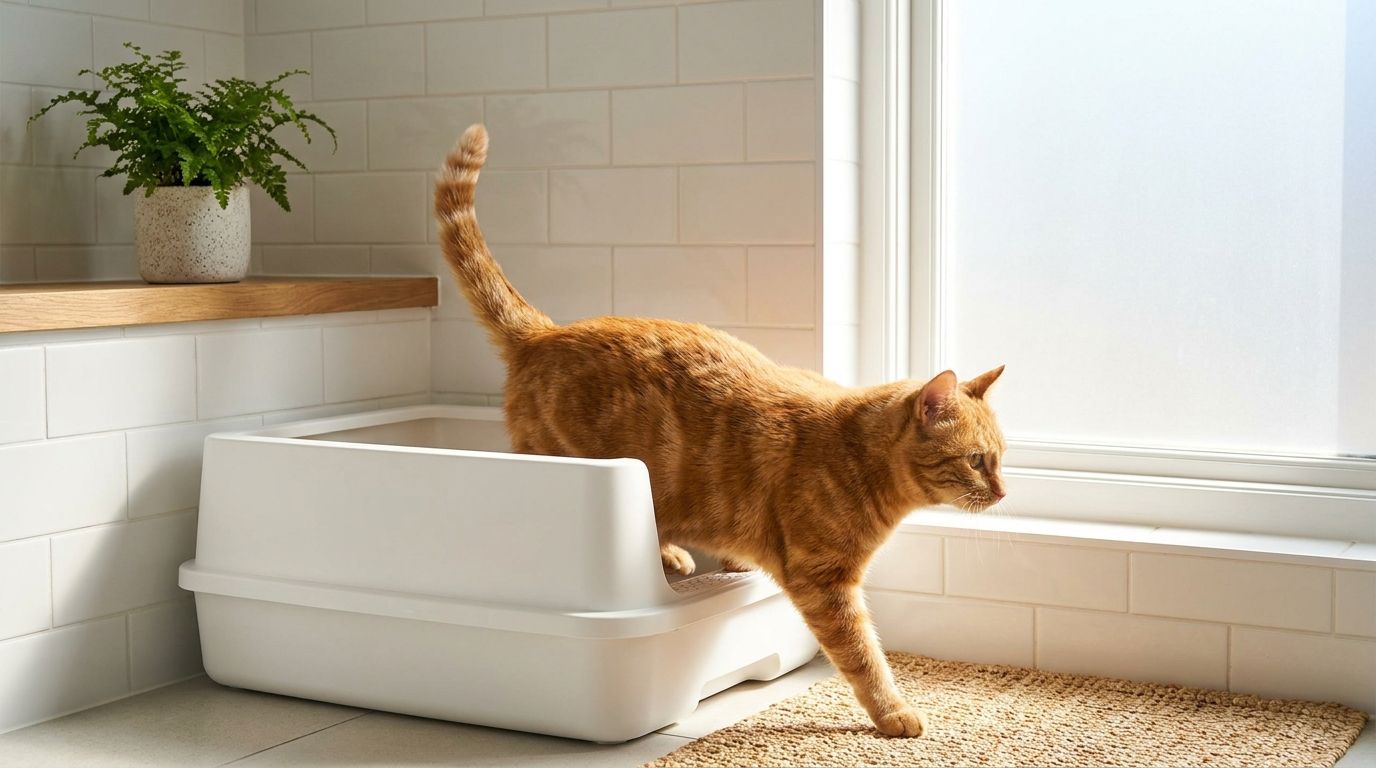
There's no single "best" litter tray — it depends on your cat and your living space. Each type has genuine pros and cons worth weighing up.
Open trays are the simplest option. They're easy to clean, give your cat a full view of their surroundings (which nervous cats appreciate), and come in at the lowest price point. The downside is obvious: litter scatter, visible waste, and no odour containment. For a spare room or utility area where aesthetics don't matter, they work perfectly well.
Covered or hooded trays add a lid and sometimes a flap door. These contain scatter much better and trap some odour, which is a blessing if the tray lives in a shared space. Some cats love the enclosed feeling — it mimics the kind of sheltered spot they'd choose outdoors. Others feel trapped, especially if the box is small or there's only one way in and out. The PDSA recommends ensuring any covered tray is large enough for your cat to turn around comfortably inside.
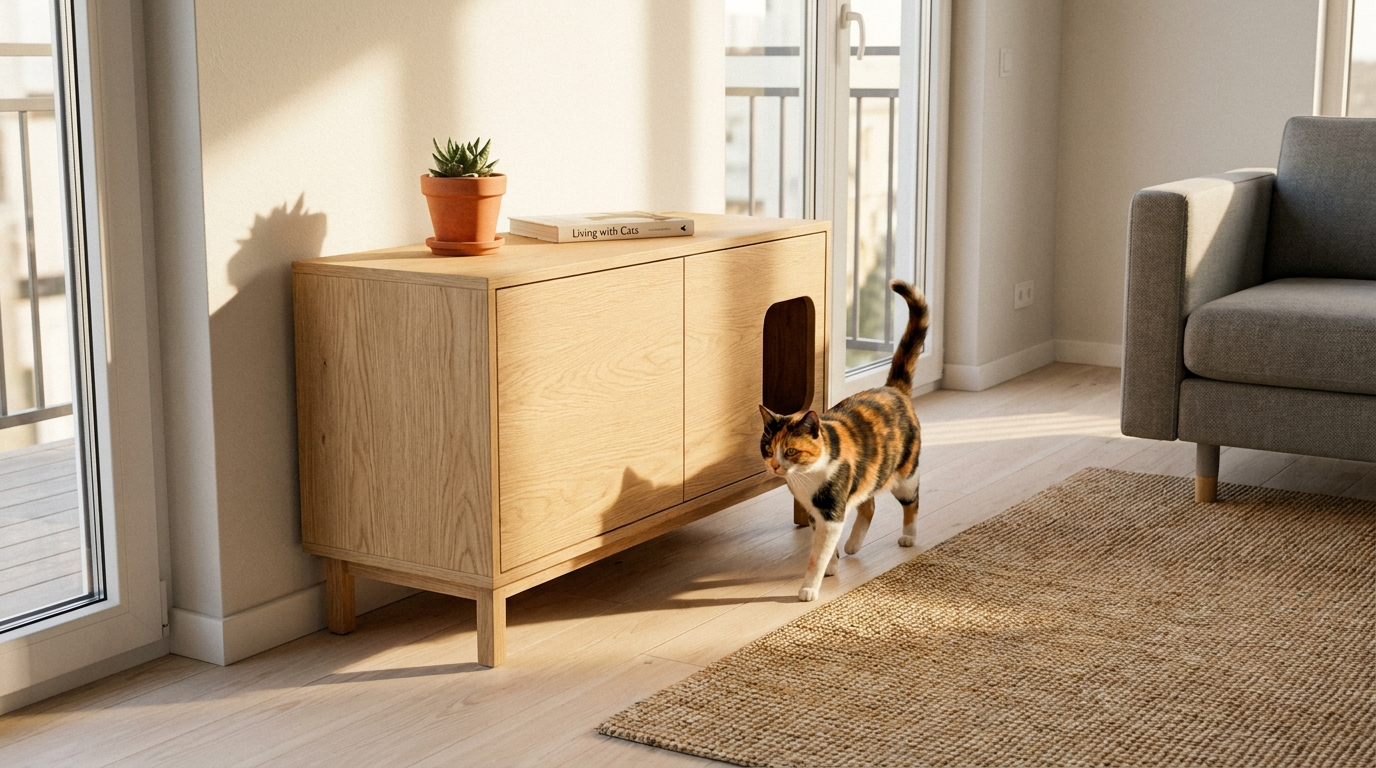
Litter box cabinets are the modern solution for anyone who wants function and style. They look like a piece of furniture — a side table, a small cupboard — but house the litter tray inside. Your cat slips in through an opening, does their business in private, and the whole thing stays hidden from view. They're particularly brilliant for open-plan flats and living spaces where a traditional tray would be an eyesore.
✅ Good to know: International Cat Care notes that most cats prefer a tray at least 1.5 times their body length. Bigger is almost always better — cats dislike feeling cramped when they're in a vulnerable position.
The Golden Rule: One Per Cat, Plus One
If you remember nothing else from this article, remember this: the recommended number of litter trays is one per cat in your household, plus one extra. So a single-cat home needs two trays. A two-cat home needs three. It sounds excessive, but there's solid reasoning behind it.
Cats are territorial. Even bonded pairs who sleep curled up together can have strong opinions about sharing a toilet. One cat may guard the tray (sometimes without the owner even noticing), leaving the other cat stressed and looking for alternatives. The extra tray acts as insurance — it ensures every cat always has an option available, even if one tray is occupied, recently soiled, or being "claimed" by a housemate.
The Blue Cross advises spreading trays across different rooms rather than lining them up side by side, as cats view two trays in the same spot as a single resource. Placement matters just as much as quantity.
Where to Put the Litter Box: A Placement Guide
Choosing the right spot can make or break your setup. Here are the key principles to follow:
- Quiet and low-traffic. Avoid hallways, the area near the front door, or anywhere the washing machine rumbles. Cats need to feel safe whilst they're vulnerable.
- Away from food and water. Cats instinctively avoid toileting near where they eat. Keep at least a couple of metres between the feeding station and the tray.
- Easy to reach at all times. Don't place the tray behind a door that might swing shut or in a room your cat can't always access. Elderly or arthritic cats also need trays on the same floor they spend most of their time on.
- Against a wall, not in the open. Cats prefer having their back to a wall when using the tray — it reduces the feeling of exposure.
💡 Tip: If your cat has started avoiding the litter tray, try moving it to a new spot before changing the litter type. A location change solves the problem more often than most owners expect.
Keeping Odours Under Control
Nobody wants their home smelling like a cattery. The good news is that odour control is straightforward if you stay on top of a few habits. Scoop solid waste at least once a day — twice if you can manage it. Most odour problems come from waste sitting in the tray too long, not from the litter itself.
Replace the litter entirely and wash the tray with warm soapy water once a week. Avoid strong disinfectants or anything with a heavy scent, as cats find these off-putting and may start avoiding the freshly cleaned tray. A mild, unscented washing-up liquid works perfectly.
Clumping litter tends to control odour better than non-clumping varieties because it locks moisture away. Fill the tray to a depth of around 3–4 centimetres — deep enough for your cat to dig and cover, but not so deep that it becomes wasteful. Litter box cabinets offer an added advantage here, since the enclosed design naturally contains smells better than an open tray sitting in the room.
⚠️ Important: Never use scented litter or air fresheners right next to the tray. Cats have a sense of smell roughly fourteen times stronger than ours, and artificial fragrances can deter them from using the box altogether.
Our Pick: A Litter Box That Blends Right In
If you're looking for a solution that keeps things tidy without cramping your cat's style, a furniture-style cabinet is hard to beat. It tucks the entire setup away, reduces scatter, and gives your cat genuine privacy — all whilst doubling as a functional piece of furniture in your home.

Petifo's PawHut Litter Tray Cabinet 2-in-1
A sleek furniture-style enclosure that hides the litter tray completely. Sturdy construction, easy-access magnetic door for cleaning, and a flat top surface you can actually use as a side table or plant stand.
✨ Doubles as real furniture — guests won't even know it's there
View product →Prefer a different style? The PawHut Litter Box Cabinet with Side Entry offers a side-opening design that some cats find easier to navigate, especially larger breeds or older cats who appreciate not having to jump or climb. And if you'd rather go with a compact covered tray without the furniture look, the Detixy Covered Litter Tray is a smart, space-saving option with a top entry that virtually eliminates litter tracking.
You can also browse our full litter box collection to find the right fit for your space and your cat.
Frequently Asked Questions
1. How often should I clean the litter box?
Scoop solid waste and clumps at least once daily. Do a full litter change and wash the tray with mild, unscented soap once a week. Cats may refuse to use a dirty tray, so consistency here prevents accidents elsewhere in the house.
2. Why does my cat go outside the litter box?
The most common causes are a dirty tray, a disliked location, the wrong type of litter, or stress from changes in the household. Medical issues like urinary infections can also be the culprit, so if the problem appears suddenly, a vet check is a good first step.
3. Is a covered litter box better than an open one?
It depends on your cat. Covered boxes reduce scatter and contain odour, but some cats feel anxious in enclosed spaces. If you switch to a covered box, keep the old open one available for a week or two so your cat can choose which they prefer.
4. What type of litter is best for cats?
Most cats prefer a fine-grained, unscented clumping litter. It feels natural under their paws and allows them to dig and cover properly. Avoid heavily perfumed varieties — they're designed to appeal to humans, not cats, and the strong scent can actually put cats off using the tray.
5. How many litter boxes do I need for two cats?
Three. The widely recommended formula is one tray per cat plus one extra. Place them in separate rooms so both cats always have a stress-free option available, even if one tray is being "guarded" by the other cat.
6. Can I put the litter box in the bathroom?
Yes, a bathroom can work well as long as the door is always left open or fitted with a cat flap so your cat is never locked out. Avoid placing the tray right next to a noisy extractor fan or a shower that runs frequently — sudden bursts of noise and steam can startle cats mid-use.
7. Are litter box cabinets worth it?
Absolutely, especially in smaller homes or open-plan living spaces. They hide the tray from view, contain litter scatter, help with odour management, and give your cat a private, enclosed toilet area. The top surface doubles as usable furniture space — it's a genuine two-in-one.
Click the image below to learn more about Detixy Covered Litter Tray.

Sources: RSPCA, PDSA, Blue Cross, International Cat Care, PetMD.