






Written by Petifo's Expert Team · Updated July 2026 · Reading time: 8 min
Quick answer: The right cat tree depends on your cat's personality (climber, lounger or scratcher), the available space in your home, and how many cats you have. Look for a sturdy base, quality scratching surfaces like sisal rope or natural wood, and platforms at different heights. For most households, a floor-to-ceiling model offers the best value — it maximises vertical space without eating up floor area.
Why Every Cat Needs a Cat Tree
If you share your home with a cat, a cat tree is not a luxury — it is a genuine necessity. Cats are hardwired to climb, scratch and survey their territory from a height. According to International Cat Care, scratching is a normal and essential feline behaviour that serves multiple purposes: it conditions claws, stretches the muscles of the forelimbs and spine, and leaves both a visual and scent marker that helps a cat feel secure in its environment.
Without a proper outlet, cats will scratch furniture, door frames and carpets — not out of spite, but because the need is instinctive. The Cats Protection charity notes that providing appropriate scratching posts and climbing structures is one of the simplest ways to prevent unwanted damage and reduce stress-related behaviours in indoor cats.
A well-chosen cat tree does three jobs at once: it gives your cat a place to scratch, a perch to observe the room from above, and a cosy nook to retreat to when they want peace. For indoor cats especially, vertical space is a form of environmental enrichment that keeps them mentally stimulated and physically active.
Match the Tree to Your Cat's Personality
Not every cat uses a cat tree in the same way. Before you buy, spend a few days watching how your cat moves around the house. Their habits will tell you exactly what to look for.
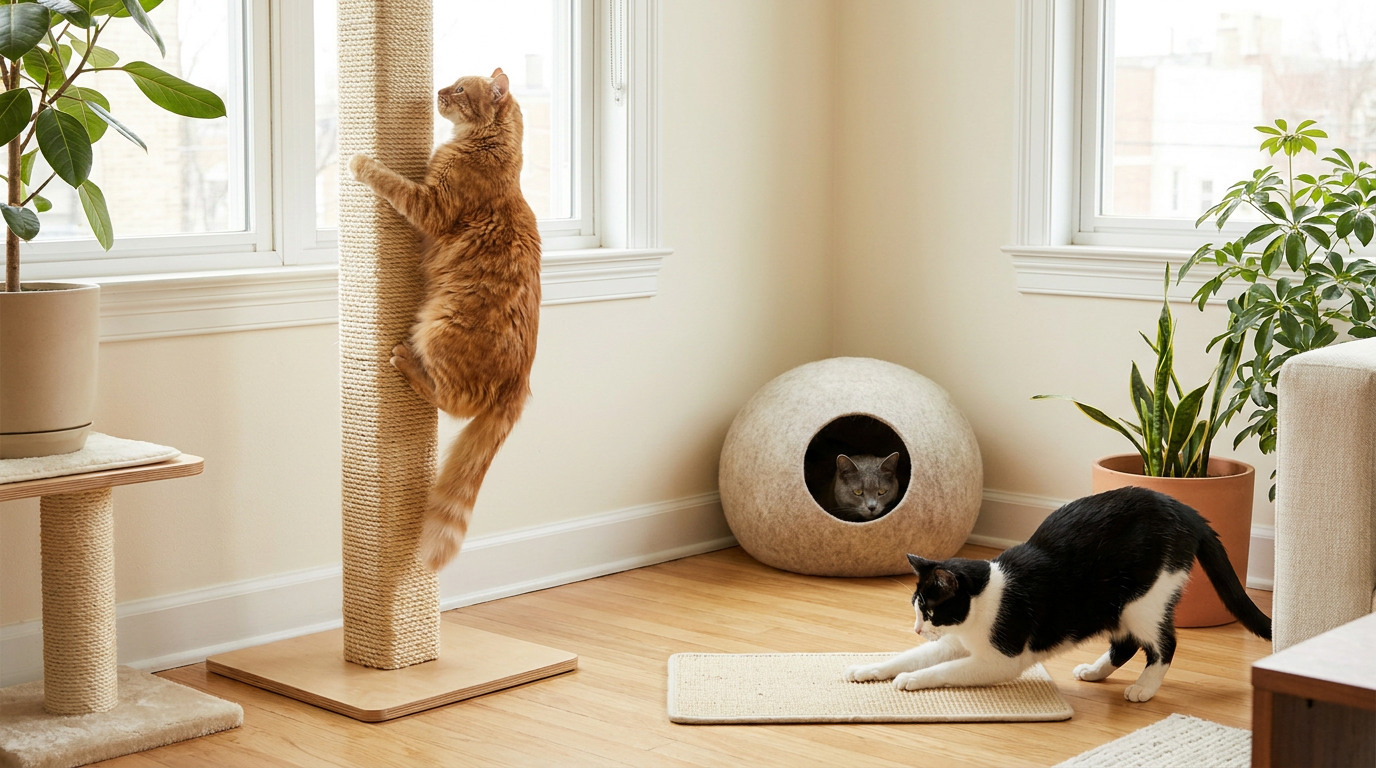
The climber. Some cats live for height. They jump on top of wardrobes, balance on door edges and always want the highest spot in the room. Climbers thrive with tall, multi-level cat trees — especially floor-to-ceiling models that let them scale the full height of a room. Look for staggered platforms, ladders and sisal-wrapped poles that create a natural climbing route.
The lounger. Other cats are happiest curled up in a warm, enclosed space. They favour the bottom shelf of a bookcase or the inside of a cardboard box. For loungers, choose a cat tree with enclosed dens, hammocks or basket-style beds. A shorter, wider model with plush-lined hideaways will suit them far better than a towering structure they will never fully use.
The scratcher. If your cat attacks every textured surface within reach, scratching surface area is the top priority. Go for a tree with thick sisal-wrapped posts — the taller and wider the posts, the better. Cats like to stretch fully when they scratch, so a post should be at least as long as your cat from nose to tail base, roughly 60 cm for an average adult.
💡 Tip: Many cats are a blend of all three types. If you are unsure, a mid-height tree with both open platforms and an enclosed den, plus generous sisal coverage, is a solid all-rounder.
Size and Space: Finding the Right Fit
Cat trees range from compact 60 cm scratching posts to floor-to-ceiling towers that span over 2.5 metres. Here is a rough guide to help you match the tree to your living space:
- Small flats or studios (under 50 m²): A wall-mounted shelf system or a slim floor-to-ceiling pole tree takes up minimal floor space while still giving height. Corner-fitting designs are especially practical.
- Medium rooms: A freestanding tree between 120–160 cm tall with two or three platforms and a den works well. It is big enough to be interesting without dominating the room.
- Large or open-plan spaces: You have room for a full-size activity centre. Consider a tree with multiple levels, ramps, hanging toys and wide bases that can handle energetic play.
Placement matters as much as size. Cats prefer their tree near a window so they can watch birds and passers-by, or in a social area of the house where the family spends time. Avoid tucking it into an unused spare room — your cat will likely ignore it.
Stability: The Non-Negotiable
A wobbly cat tree is a cat tree that gathers dust. Cats are cautious animals, and if the structure rocks or sways when they jump onto it, they will stop using it almost immediately. The RSPCA recommends that all climbing furniture should be sturdy and securely fixed, particularly for larger or more athletic breeds.
⚠️ Important: Always check the maximum weight rating on a cat tree, especially if you have a large breed like a Maine Coon or British Shorthair. A tree rated for 5 kg will not hold a 7 kg cat safely. Floor-to-ceiling models with ceiling tension brackets are among the most stable options available.
Key stability features to look for:
- A wide, heavy base — at least as wide as the tallest point of the tree
- Ceiling brackets or wall-anchor points for tall structures
- Solid wood or thick particleboard construction rather than thin cardboard tubes
- Anti-slip pads on the bottom to prevent sliding on hard floors
Material Guide: What Lasts and What Doesn't
The materials used in a cat tree determine how long it will last, how safe it is, and whether your cat will actually enjoy using it.
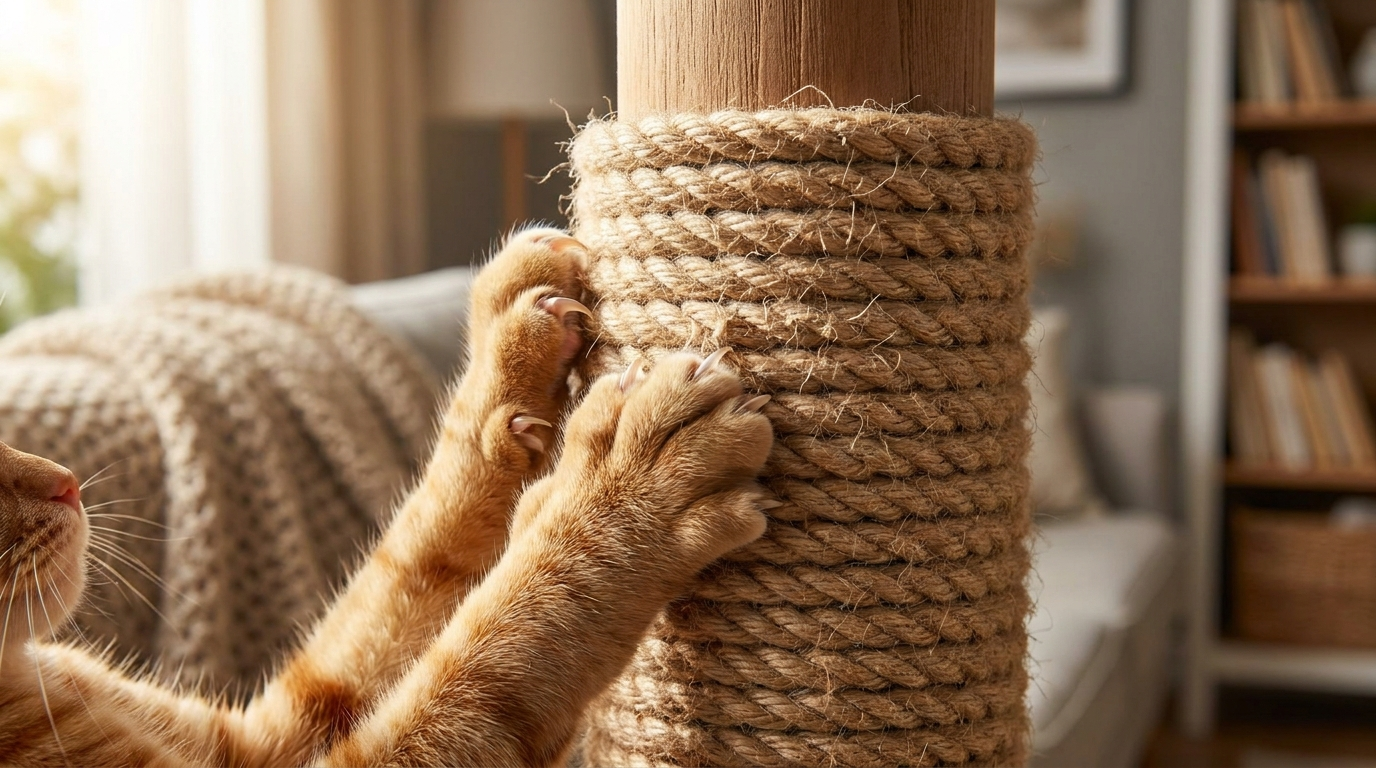
Sisal rope. The gold standard for scratching surfaces. Natural sisal is tough, satisfying for cats to dig their claws into, and far more durable than carpet. A well-wrapped sisal post can last years before needing replacement. Avoid trees that use sisal fabric instead of rope — it frays faster and offers less resistance.
Natural and solid wood. Wooden cat trees have grown in popularity for good reason. They are heavier (which means more stable), look better in modern interiors, and can be wiped clean easily. Real wood posts also mimic the bark of a tree trunk, which appeals to your cat's natural instincts. Our Solid Wood Cat Tree and Natural Wood Cat Tree with Basket and Den are excellent examples — sturdy, elegant and built to last.
Carpet and plush fabric. Soft materials are fine for platforms and dens where your cat will sleep, but they are a poor choice for scratching surfaces. Carpet fibres catch claws awkwardly and wear out quickly. If a tree uses carpet on its posts, expect to replace them sooner.
Faux fur and fleece. Comfortable for bedding areas and easy to wash. Look for removable, machine-washable covers to keep things hygienic.
Cat Trees for Multi-Cat Households
If you have more than one cat, vertical space becomes even more important. Cats establish subtle hierarchies, and having access to different height levels helps reduce tension and territorial disputes. The International Cat Care organisation advises providing multiple resting spots at various heights so each cat can choose its preferred level without conflict.
For multi-cat homes, look for:
- Trees with at least one platform or den per cat
- Multiple entry and exit points so no cat gets trapped or cornered
- Wider platforms that allow two cats to share without being forced into close contact
- Separate scratching posts at different heights
A floor-to-ceiling tree is particularly effective here because it offers the most levels in the smallest footprint. You might also consider placing two smaller trees in different rooms rather than relying on a single large one.
✅ Good to know: Kittens can start using a cat tree from around 12 weeks old, but choose a shorter model with low platforms at first. Their coordination is still developing, and a fall from a tall tree could cause injury. You can upgrade to a full-height tree once they reach about six months.
Our Pick: TassTorn Floor-to-Ceiling Cat Tree
If you want a single tree that ticks every box — height, stability, scratching surfaces and sleeping spots — the TassTorn is our top recommendation for most cat owners.

Petifo's TassTorn Floor-to-Ceiling Cat Tree
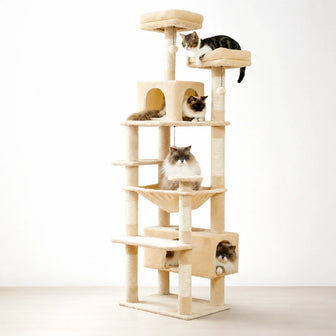
A height-adjustable cat tree that spans from floor to ceiling, featuring multiple sisal-wrapped scratching posts, spacious platforms at staggered heights, a cosy enclosed den and a top-level observation perch. Fits standard ceiling heights from 230 to 260 cm.
✨ Maximum vertical territory with zero wasted floor space — the smartest solution for small homes and multi-cat households alike.
View product →Explore the Full Petifo Cat Tree Range
Every home is different, and every cat has its own preferences. That is why we have curated a range of cat trees to suit different spaces, styles and budgets. Here are a few more favourites from our collection:
The PAWZ Cat Tree with Grooming Arch combines a scratching post with a built-in grooming brush arch — perfect for cats that love rubbing against furniture corners. It is compact enough for smaller spaces and gives your cat a satisfying self-grooming session every time they walk through.
For something with real personality, the Dinosaur-Shaped Cat Tree is a playful statement piece that children and cats both adore. Do not let the fun shape fool you — it is solidly built with full sisal wrapping and a roomy interior den.
If aesthetics are a priority, our solid wood options blend seamlessly with Scandinavian and minimalist interiors. The Solid Wood Cat Tree offers clean lines and natural timber construction, while the Natural Wood Cat Tree with Basket and Den adds a woven basket and enclosed den for cats that like a warm hiding spot.
Click the image below to learn more about PAWZ Cat Tree with Grooming Arch.

Click the image below to learn more about Dinosaur-Shaped Cat Tree.

Click the image below to learn more about Solid Wood Cat Tree.

Click the image below to learn more about Natural Wood Cat Tree with Basket and Den.

Frequently Asked Questions
1. How tall should a cat tree be?
As a general rule, the taller the better — cats feel safest when they can observe a room from above. A minimum height of 90 cm is recommended for adult cats, but most cats prefer trees of 150 cm or more. Floor-to-ceiling models (230–260 cm) offer the ultimate vertical territory.
2. Can kittens use a cat tree?
Yes, but start with a shorter model. Kittens can begin using cat trees from around 12 weeks, though their coordination is still developing. A tree under 100 cm with low platforms reduces the risk of falls. Upgrade to a taller tree once the kitten is roughly six months old and confident in its jumping.
3. Where is the best place to put a cat tree?
Place it near a window in a room where the family spends time. Cats want to be part of the household activity and enjoy watching outdoor wildlife. Avoid basements, utility rooms or any space the family rarely uses — your cat will likely ignore a tree tucked away out of sight.
4. How do I get my cat to use the new tree?
Place treats or a pinch of catnip on the platforms. Dangle a wand toy from the upper levels to encourage exploration. Do not force your cat onto the tree — let them discover it at their own pace. Most cats begin using a new tree within a few days once it carries their scent.
5. How often should I replace a cat tree?
A quality cat tree can last three to five years or longer, depending on usage and the number of cats. Replace sisal rope on posts when it becomes heavily frayed or starts to unravel. If the base becomes unstable or the structure wobbles, it is time for a new tree regardless of age.
6. Do I need one cat tree per cat?
Not necessarily, but you do need enough resting and scratching spots for each cat. A large tree with multiple platforms can serve two or three cats comfortably. In homes with four or more cats, or with cats that do not get along well, having two trees in separate rooms helps avoid resource guarding.
7. Is sisal or carpet better for scratching?
Sisal rope is better in almost every way. It is more durable, provides better claw resistance, and does not trap fur or odours the way carpet does. Most cats also prefer the texture of sisal. Carpet is fine for sleeping platforms but should be avoided on scratching posts.
Sources
Sources: International Cat Care — Scratching, Cats Protection — Scratching, RSPCA — Indoor Cat Environment, International Cat Care — The Cat-Friendly Home.