









Written by Petifo's Expert Team · Updated July 2026 · Reading time: 7 min
Quick answer: Indoor cats thrive when their environment mimics the variety of the outdoors — vertical climbing space, hiding spots, daily interactive play, scratching surfaces and mental challenges keep them physically fit and emotionally content.
Keeping a cat indoors is one of the safest choices you can make. It protects them from traffic, predators, disease and getting lost. But an indoor-only lifestyle comes with a responsibility: you need to recreate the stimulation that the outside world would naturally provide.
Without enrichment, indoor cats can develop stress-related behaviours like over-grooming, spraying, aggression or lethargy. The RSPCA notes that boredom and inactivity are among the leading causes of obesity in UK cats, with an estimated 44% of cats now classified as overweight. The good news is that creating a stimulating indoor environment doesn’t require a mansion or a huge budget — just some thoughtful planning.
Here are seven proven ways to keep your indoor cat happy, healthy and mentally sharp.
1. Create Vertical Space with Cat Trees
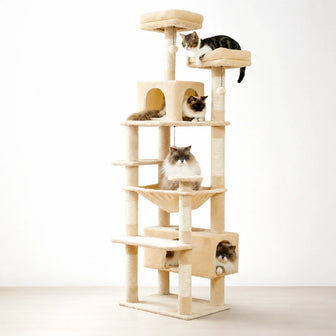
Cats are natural climbers. In the wild, height gives them a vantage point to survey territory, spot prey and feel safe from ground-level threats. Indoors, this instinct doesn’t disappear — it just needs an outlet.
A well-designed cat tree offers climbing, perching, scratching and napping all in one structure. Position it near a window so your cat can watch the world go by, and choose a model tall enough to reach at least mid-wall height. Multi-level trees with platforms at different heights are ideal for households with more than one cat, as they allow each animal to claim its own spot without conflict.
The PDSA recommends providing at least one elevated resting spot per cat in the household. If floor space is limited, wall-mounted shelves and cat walkways are excellent alternatives that use vertical real estate your cat would otherwise ignore.
★ Tip: Place the cat tree next to a window that gets morning sun. Cats are crepuscular — most active at dawn and dusk — and a sunny perch during their natural waking hours makes the spot irresistible.
2. Provide Plenty of Scratching Surfaces
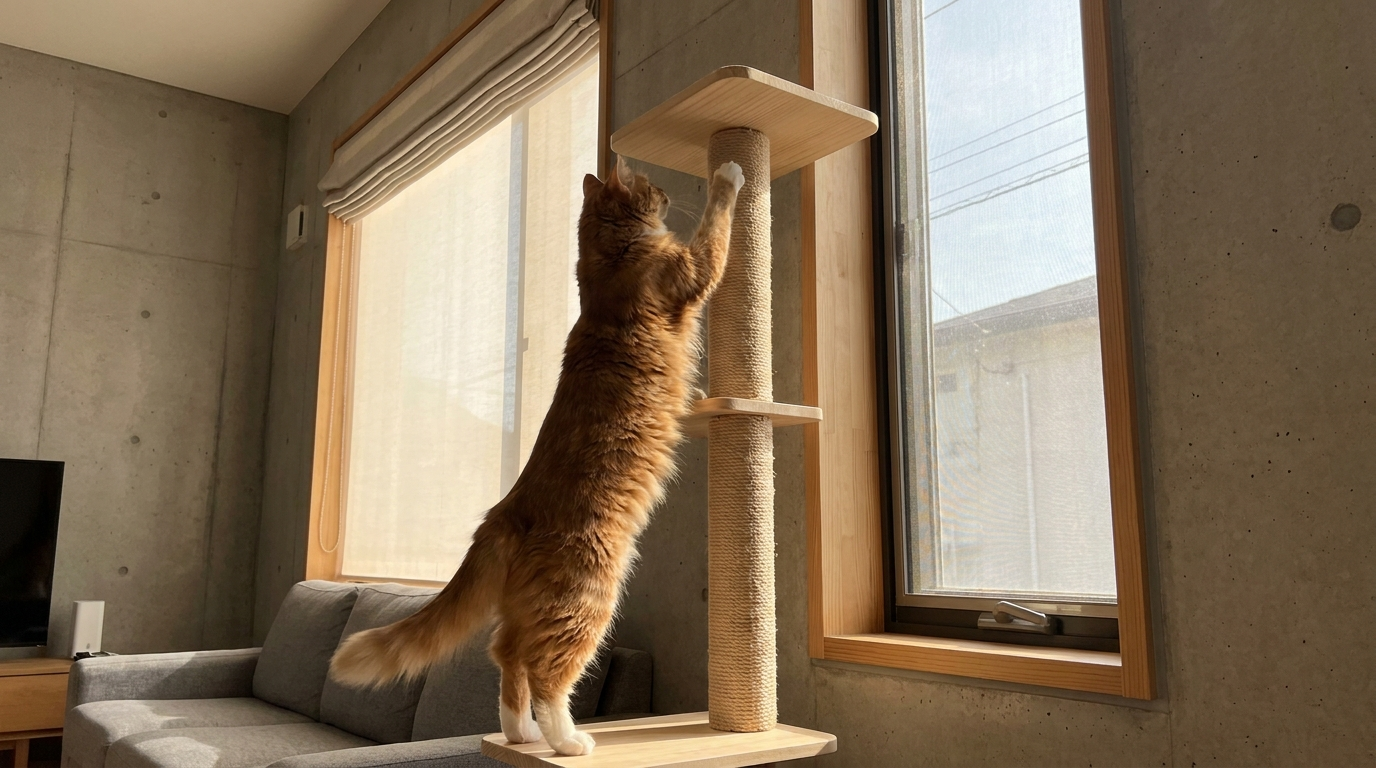
Scratching isn’t destructive behaviour — it’s essential. Cats scratch to maintain their claws, stretch their muscles, mark territory and relieve stress. If you don’t provide appropriate surfaces, your sofa will volunteer.
Offer a variety of textures and orientations. Some cats prefer vertical scratching posts wrapped in sisal, while others favour horizontal cardboard scratchers. A wall-mounted scratching board is a space-saving option that also serves as a visual feature in your home.
Place scratchers near your cat’s favourite resting spots and by doorways — cats often scratch after waking up and when entering a room. The Blue Cross advises having at least one scratching surface per cat, plus one extra, spread around different rooms.
3. Offer Hiding Spots and Cosy Dens
A cat that has nowhere to hide is a cat that feels exposed and vulnerable. Hiding isn’t a sign of fear — it’s a fundamental feline need. Even the most confident cat benefits from enclosed, den-like spaces where they can retreat, sleep undisturbed and feel completely secure.
Cardboard boxes are the classic solution (and cats genuinely love them), but purpose-built cat dens like the Lunatto Cat Den combine that enclosed feeling with an integrated scratching surface, making them both a retreat and an activity station.
For multi-cat households, ensure each cat has access to their own hiding spot. Competition for safe spaces is a common source of inter-cat tension that owners often overlook.
✓ Good to know: Research from the University of Utrecht found that shelter cats provided with hiding boxes adapted to their new environment significantly faster and showed lower stress levels than those without access to hiding spaces.
4. Schedule Daily Interactive Play Sessions
Interactive play — where you actively engage with your cat using a toy — is the single most effective way to prevent boredom and maintain a healthy weight. It mimics the hunt sequence (stalk, chase, pounce, catch) that your cat’s brain is wired for.
Wand toys with feathers or fabric strips are particularly effective because they allow you to mimic the erratic movement of prey. Drag the toy along the floor, let it “hide” behind furniture, and allow your cat to catch it regularly — a hunt that never ends in a catch is frustrating, not fun.
Aim for two play sessions of 10–15 minutes each day. The PetMD recommends following each session with a small meal or treat, which mirrors the natural hunt-catch-eat-groom cycle and helps your cat wind down and feel satisfied.
Rotate toys every few days to prevent habituation. A toy that’s been out continuously loses its novelty — put it away for a week and it becomes exciting again.

Petifo's PAWZ Cat Tree with Grooming Arch
A multi-level climbing and scratching station with an integrated grooming arch that lets your cat self-groom while they play.
★ Combines vertical space, scratching, perching and grooming in one compact design
View product →5. Set Up Window Perches for Bird Watching
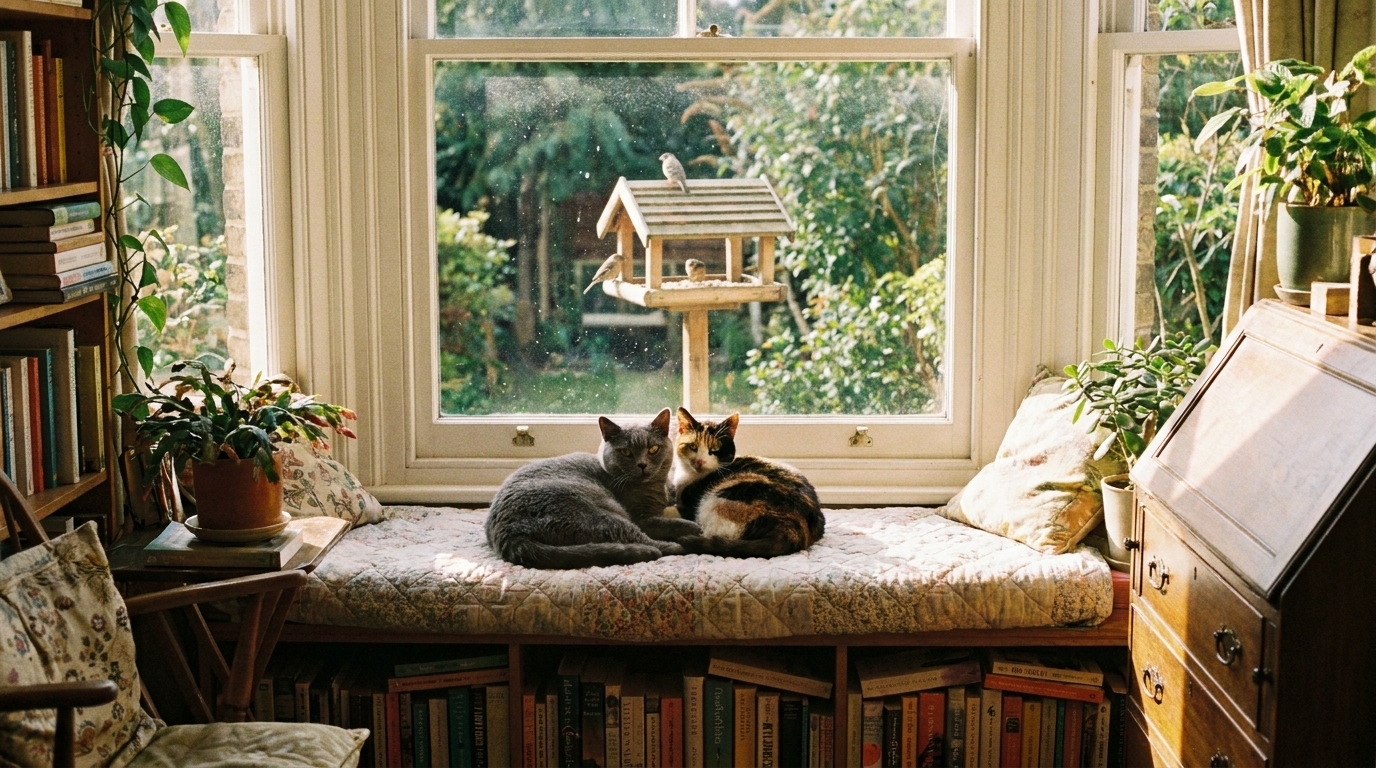
Never underestimate the power of a good window. For an indoor cat, a window is essentially a television channel that plays nature documentaries all day long. Birds, squirrels, insects, passing pedestrians and blowing leaves provide endless visual stimulation.
A padded window perch or a cat tree positioned beside a window gives your cat a comfortable front-row seat. If your garden attracts few birds, consider hanging a bird feeder outside the window — your cat will be transfixed.
A double cat bed lounge placed beneath a window also works beautifully, giving two cats the chance to share the prime viewing spot without crowding each other.
6. Introduce Puzzle Feeders and Food Challenges
In the wild, cats spend a significant portion of their waking hours hunting for food. When meals arrive in a bowl twice a day, that mental and physical energy has nowhere to go.
Puzzle feeders make your cat work for their food by batting, rolling or manipulating an object to release kibble. Start with simple designs — a muffin tin with kibble in each cup covered by tennis balls, for example — and gradually increase the difficulty as your cat masters each level.
You can also scatter-feed dry food around the house, hiding small portions on shelves, inside empty boxes and behind cushions. This turns mealtime into a foraging session that engages your cat’s nose, brain and body simultaneously.
★ Tip: Freeze wet food inside a silicone mould or Kong-style toy for a longer-lasting food challenge that also provides cooling relief on warm days.
7. Consider Safe Outdoor Access with a Cat Flap
If your home and garden allow it, controlled outdoor access can be a game-changer for an indoor cat’s quality of life. A microchip-activated cat flap lets your cat come and go while keeping strays and wildlife out.
Pair it with a secure, enclosed garden or “catio” for the safest setup. Even a small balcony with cat-safe netting gives your indoor cat access to fresh air, new scents and the feeling of grass or stone underfoot.
The Kennel Club (which also covers cats in its welfare resources) and the RSPCA both note that controlled outdoor access — rather than free-roaming — is the best compromise between safety and enrichment for cats in urban and suburban areas.
&x26A0;&xFE0F; Important: Before letting your cat outside, ensure they are microchipped, vaccinated and neutered. Check that your garden is free from toxic plants such as lilies, azaleas and foxgloves, all of which are highly dangerous to cats.
Frequently Asked Questions
1. Can indoor cats really be as happy as outdoor cats?
Absolutely. Studies show that indoor cats with adequate enrichment live longer, healthier lives with lower stress levels than free-roaming cats. The key is providing enough variety in their environment to satisfy their natural instincts for climbing, hunting, scratching and hiding.
2. How do I know if my indoor cat is bored?
Common signs include over-grooming (bald patches), excessive meowing, aggression towards people or other pets, destructive scratching on furniture, overeating and sleeping far more than usual. If you notice any of these behaviours, increasing enrichment is a good first step before consulting a vet.
3. How much playtime does an indoor cat need each day?
Most experts recommend at least 20–30 minutes of interactive play spread across two or three sessions. Kittens and young adults may need more. The goal is to get your cat moving, pouncing and mentally engaged, not just swatting lazily at a toy.
4. Do I need one cat tree per cat?
Not necessarily, but each cat should have access to their own elevated resting spot. A large, multi-platform cat tree can serve two or even three cats if it has enough levels and perches. In multi-cat homes, adding wall shelves at different heights provides extra vertical territory.
5. Are laser pointers good toys for cats?
Laser pointers can be stimulating but should always end with a tangible “catch” — redirect the dot onto a treat or physical toy your cat can grab. A hunt that never results in a catch can cause frustration and anxiety over time.
6. What plants are safe to have around indoor cats?
Cat grass (wheatgrass), spider plants, Boston ferns and parlour palms are all non-toxic. Avoid lilies (all species), poinsettias, aloe vera and snake plants, which are toxic to cats. The RSPCA maintains a full list of poisonous household plants on their website.
7. My cat ignores new toys. How do I get them interested?
Cats are neophilic but also creatures of habit — a new toy left in the middle of the floor may be ignored if it doesn’t move. Try animating it yourself, rubbing it with catnip, or hiding it partially under a blanket. Movement and scent trigger the prey drive far more effectively than a static object.
Sources
- RSPCA — Indoor cat welfare and enrichment guidance
- PDSA — Cat environment and vertical space recommendations
- Blue Cross — Scratching behaviour and surface advice
- PetMD — Interactive play and feeding enrichment
- AKC — General pet care resources