




Quick answer: Pet strollers are not just for pampered pooches — they are a genuine mobility aid for senior dogs with joint pain, injured pets recovering from surgery, small breeds that tire quickly on long walks, anxious animals that need a safe retreat in busy environments, and multi-pet households where not every animal walks at the same pace. If any of those sound familiar, a stroller is worth considering. Our top recommendation is the Detixy Pet Stroller with Rain Cover for its all-weather versatility and generous weight capacity.
Written by Petifo's Expert Team · Updated July 2026 · Reading time: 7 min
Why Pet Strollers Are More Popular Than Ever
A decade ago, seeing a dog in a pushchair might have raised a few eyebrows. Today, pet strollers are one of the fastest-growing categories in pet transport — and for good reason. Whether you are managing a dog recovering from surgery or simply trying to take your cat to the vet without a meltdown, a stroller gives your animal a safe, enclosed space that moves with you.
Your pet sits inside a covered cabin mounted on wheels, pushed just like a child's buggy. Most models include mesh windows for ventilation, a canopy for shade and a harness clip to keep your pet secure. Some, like the Detixy Pet Stroller with Rain Cover, even include a waterproof rain cover so you are never forced to cut your walk short.
Veterinary organisations such as the PDSA emphasise that regular outdoor stimulation — fresh air, new smells, visual variety — is vital for a pet's mental health, even when their physical condition limits how far they can walk. A stroller makes that possible without straining joints or healing wounds.
Who Actually Benefits from a Pet Stroller?
Strollers are genuinely useful for a surprisingly wide range of pets and situations. Here are the most common cases.
Senior dogs with mobility issues. Arthritis, hip dysplasia and age-related stiffness can make even a short walk painful. A stroller lets your older dog enjoy the outdoors without bearing weight on aching joints the entire time — walk as far as they are comfortable, then ride the rest of the way home. According to the AKC, roughly one in four dogs develops arthritis, with the figure climbing steeply after age seven.
Injured or post-surgery pets. After operations such as cruciate ligament repair, vets often prescribe restricted exercise but still encourage gentle outdoor exposure. A stroller provides exactly that — controlled stimulation while keeping your pet contained.
Small breeds that tire quickly. Chihuahuas, Pomeranians and Dachshunds have short legs and limited stamina for long walks. If you enjoy lengthy outings or want to bring your small dog to a market or city trip, a stroller means they do not have to keep up on foot the entire time.
Anxious or reactive dogs. Some dogs become overwhelmed in crowded environments. The enclosed cabin acts as a mobile safe space — they can see out through the mesh but remain shielded from other dogs, cyclists and strangers. The RSPCA notes that providing a retreat space is one of the most effective ways to manage anxiety in dogs.
Cats. Cats in a standard carrier often find the experience stressful because of jostling and poor airflow. A stroller offers a smoother ride, better ventilation and a higher vantage point that many cats find reassuring.
Multi-pet households. If you have two dogs that walk at very different paces — say, a young Labrador and an elderly Cavalier King Charles — a Detixy Double Pet Stroller lets the slower pet ride while the other walks alongside you on a lead.
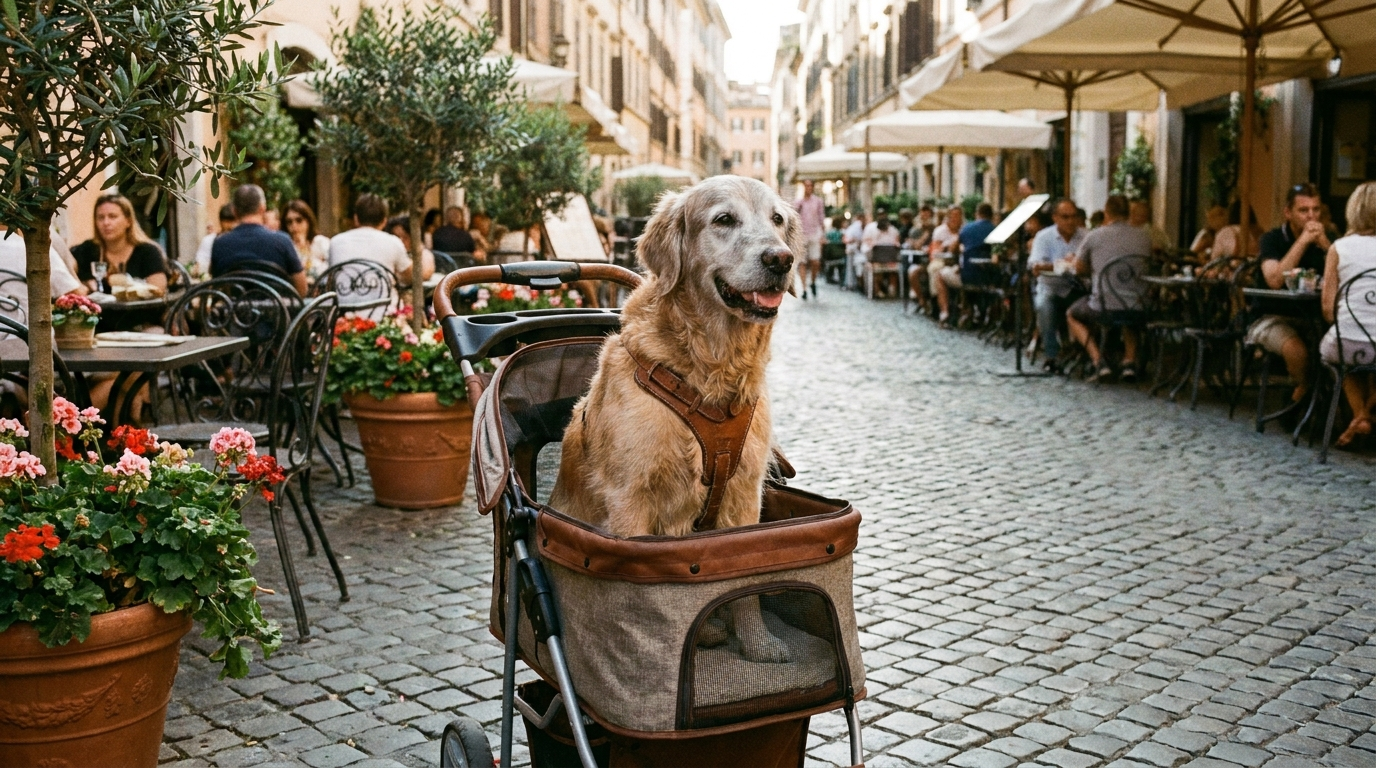
✅ Good to know: Using a stroller does not mean your dog stops walking altogether. Most owners use them as a hybrid — their pet walks for part of the outing and rides in the stroller when they need a rest. It is about flexibility, not replacement.
Types of Pet Strollers
Not every stroller is built the same way. Understanding the main categories helps you narrow down your options quickly.
Standard strollers feature a single cabin, a retractable canopy and three or four wheels. They suit most small-to-medium dogs and cats and work well on pavements, park paths and in shopping centres. The Detixy Pet Stroller with Rain Cover is a strong example — it covers the essentials and adds weather protection as standard.
Foldable strollers collapse into a compact shape that fits in a car boot or a cupboard. If you travel frequently or live in a flat with limited storage, a foldable model like the PawHut Foldable Pet Stroller is worth prioritising.
Double strollers have two separate compartments so you can transport two pets at once. Ideal for multi-pet households or when one pet walks and the other rides. The Detixy Double Pet Stroller is our go-to pick for this category.
Heavy-duty strollers have reinforced frames, larger wheels and higher weight limits for bigger breeds. If your dog weighs more than 20 kg, a standard stroller will not support them safely. The Foldable Pet Stroller for Large Dogs combines a heavy-duty frame with foldable convenience.
Features to Compare Before You Buy
Once you have narrowed down the type, there are several features worth comparing side by side. Here is what matters most in practice.
Weight limit. Every stroller has a maximum weight capacity, and exceeding it risks frame damage and your pet's safety. Weigh your pet and add a couple of kilograms for margin — and if your pet is still growing, factor in their expected adult weight.
Foldability. If you plan to take the stroller in the car or store it in a small flat, check how it folds and how compact it becomes. Some models fold flat in one motion; others require removing parts first.
Rain cover. Northern European weather is unpredictable. An included rain cover means you are never caught out. Models without one need an aftermarket cover, which may not fit perfectly and adds to the cost.
Wheel size and type. Larger wheels handle gravel, cobblestones and uneven surfaces far better than small ones. Swivel front wheels make turning easier in tight spaces, while lockable wheels improve stability at speed.
Ventilation. Mesh panels on at least two sides are essential for airflow, especially in warmer months. A fully enclosed cabin with poor ventilation can overheat quickly in the sun.
Storage. Most strollers include an under-cabin basket for leads, bags and water bottles. Check its size — a tiny basket sounds minor until you have nowhere to put the essentials on a long walk.
💡 Tip: Before your first real outing, let your pet explore the stroller at home with the brakes on. Place treats inside, leave the door open and let them climb in and out freely. A few short practice sessions make the first walk much smoother for everyone.
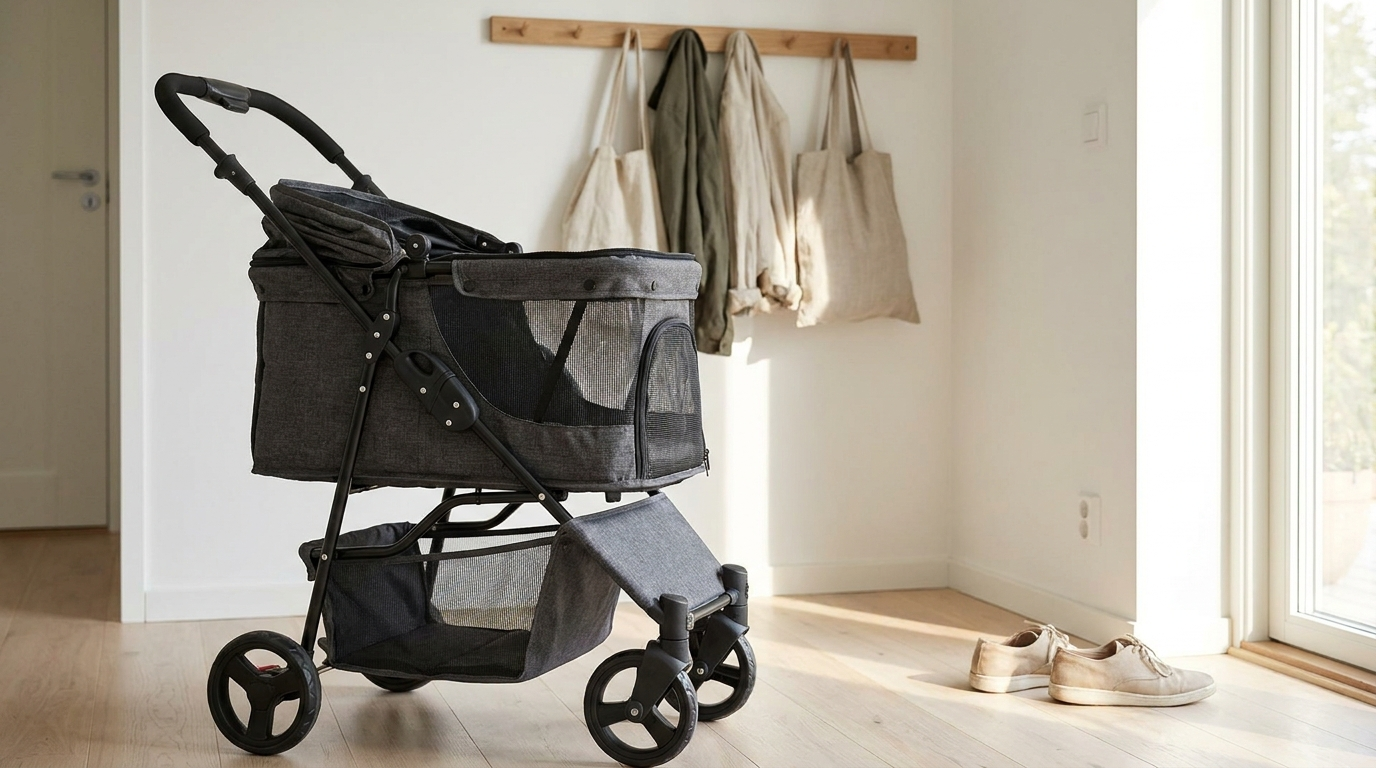
Our Pick: Detixy Pet Stroller with Rain Cover
For most pet owners looking for a reliable, well-rounded stroller, this is the model we recommend. It ships with a rain cover included — a feature you will appreciate the first time the sky opens up mid-walk — and offers generous cabin space, mesh ventilation on multiple sides and a sturdy frame with smooth-rolling wheels.

Petifo's Detixy Pet Stroller with Rain Cover
A versatile stroller with an included rain cover — perfect for all-weather walks with your dog or cat.
✨ All-weather protection included
View product →⚠️ Important: Never leave your pet unattended in a stroller, especially in warm weather. Even with mesh ventilation, a parked stroller in direct sunlight can heat up rapidly. Treat it the same way you would a parked car — if you would not leave your pet in one, do not leave them in the other.
Quick Stroller Comparison
- Detixy Pet Stroller with Rain Cover — Best all-rounder. Included rain cover, mesh ventilation, smooth wheels.
- PawHut Foldable Pet Stroller — Best for travel. Quick fold, lightweight frame, fits in most car boots.
- Detixy Double Pet Stroller — Best for two pets. Dual-cabin design for multi-pet households.
- Foldable Pet Stroller for Large Dogs — Best for bigger breeds. Reinforced frame, higher weight capacity.
Frequently Asked Questions
1. Are pet strollers suitable for cats?
Absolutely. Many cats actually prefer a stroller to a standard carrier because the ride is smoother, there is better airflow through the mesh panels, and they can sit at a higher vantage point. Just make sure the cabin zips fully closed so your cat cannot escape, and use the internal harness clip for extra security.
2. What weight can a pet stroller hold?
It varies by model. Standard strollers typically support 15 to 20 kg, while heavy-duty models like the Foldable Pet Stroller for Large Dogs can handle considerably more. Always check the stated weight limit and do not exceed it — the frame, wheels and brakes are all designed around that number.
3. Can I use a pet stroller on rough terrain?
For gravel paths, cobblestones and light off-road surfaces, a stroller with larger wheels and air-filled or foam-filled tyres will perform well. For truly rugged trails or deep grass, most strollers will struggle. Stick to paved or semi-paved routes for the best ride quality and the longest wheel lifespan.
4. How do I get my dog used to a stroller?
Start indoors with the brakes on. Place treats and a familiar blanket inside and let your dog explore at their own pace — never force them in. Once they are comfortable, take a few short trips around the garden before attempting a full walk. Most dogs adjust within three to five sessions.
5. Do I need a rain cover for my pet stroller?
If you live anywhere with unpredictable weather — which covers most of northern Europe — yes. A rain cover keeps your pet dry and blocks wind chill without compromising ventilation. The Detixy Pet Stroller with Rain Cover includes one as standard, saving you the hassle and cost of buying a separate accessory.
6. Is a double stroller worth it for two pets?
If you regularly walk two pets that move at different speeds, a double stroller is far more practical than juggling two singles. The separate compartments also prevent territorial squabbles during the ride. The Detixy Double Pet Stroller is designed for exactly this.
7. Can I take a pet stroller on public transport?
Policies vary by operator, but most European bus and train services treat pet strollers like pushchairs — allowed on board if they are not blocking exits. Foldable models like the PawHut Foldable Pet Stroller are particularly handy here, as you can collapse them if the carriage is crowded.